Exhibition

Past
2026
07.11Sat
2026
08.23Sun.
PARCEL
Open on Wed - Sun
14:00 - 19:00
Closed: Mon, Tue, National Holidays
Summer closure from 8/13 (Thu) to 8/16 (Sun)
Opening reception on July 10th, Fri. 18:00-21:00
giga
森 靖|Osamu Mori
details - JP
かつてキロバイトは大きかった。それがメガになり、ギガになり、今やテラでさえ「大きい」かどうか実感を持って語れる人は少ない。単位は更新され続けているのに、「巨大さ」の感覚だけが静かに失われていく。gigaという言葉はもはや大きさを意味せず、ただの日常単位として消費されている。
コピーと増殖が自動化されたこの時代に、美やかたちをめぐる感覚にも同じ麻痺が起きている——彫刻家・森靖の新作個展「giga」は、そのような問いから出発しています。
森靖は1983年愛知県生まれ。2009年に東京藝術大学大学院彫刻専攻を修了後、2010年に初個展「Can’t help falling in love」を開催。2011年には横浜トリエンナーレに参加し、国内外で注目を集めました。2020年にはPARCELでの初個展「Ba de ya」を開催し、高さ4Mに迫るエルビスプレスリーを模した大型彫刻を発表、アメリカのポップアイコンから中世古典彫刻まで、非常に長い時系列にわたるモチーフを縦横無尽に行き来しながら、「美」の根源的な意味と、記号的な思い込みに対して問いかける作品を発表し続けてきました。2023年にはPARCELでの2度目の個展「Twister」を開催し、そこで発表した作品がオーストラリアのNGV(ビクトリア国立美術館)のトリエンナーレに出品され、同館に収蔵されるなど国際的な評価も高まっています。
森の制作の特徴のひとつは、即興性と物質への向き合い方にあります。西洋彫刻が身体を表現の「対象」として外側から取り出そうとし、東洋の仏像彫刻が身体を霊的な「依り代」として内側から立ち上げようとしてきたとすれば、森にとって身体はそのどちらでもなく、自然に残された形状や特徴に対して呼応することで初めて彫られ、現れるものです。素材の持つ形体や質量を出発点とし、予定調和を段階的にねじり転換させながら最終形へと向かうプロセスは、作品ごとに固有のかたちを生み出してきました。またこれまで手のひらに乗るサイズから4メートルに迫る大型作品まで、スケールそのものを問い続けてきました。森はこう語ります。「あらゆる時代と人間との関係が”スケール”となって表れてきている。”スケール”は人の感覚と現代の世界を繋ぐ一つの要素である。」2024年には長野・碌山美術館での個展において「巨大化宣言」を打ち立て、現在5メートルを超える作品の制作にも着手しています。
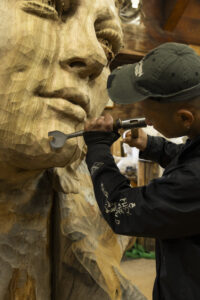
©Osamu Mori, in courtesy of PARCEL, photo by Kohei Omachi
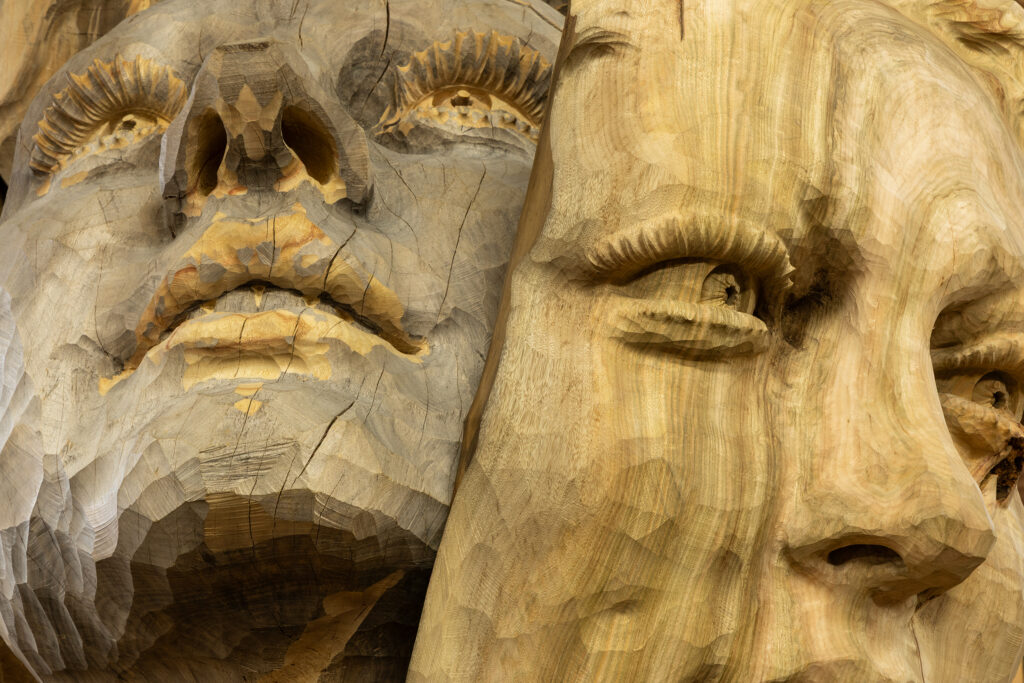
本展では、これまでで最大となるこの作品を発表します。樹齢100年を超える木材を20本以上使用し、お台場に鎮座する自由の女神像に近い寸法で制作された新作は「巨大化宣言」を起点として展開されたシリーズの集大成です。
公式、非公式に世界に複数存在する(米国型の)自由の女神は、冠・松明・足枷・宣言書によって「自由」を体現していますが、女神本人には名もなく、その顔は無表情のまま佇んでいます。コスチュームと記号を模倣すれば誰でも似せられるその像は、オリジナルとコピーの境界が溶けた時代における美の混乱を象徴しているとも言えます。そのあり方は、「巨大化宣言」を軸に造形の本質を問い続ける森靖の作風と、根底でつながっています。
木彫に加え、奇形樹・鍾乳石・鉛による金属作品など、素材それぞれが持つ「コピーできない時間の堆積」を主題とした新作群も同時に展示されます。
画一的な美が存在せず、あらゆるかたちが無限に増殖するこの時代において、森は「美とは何か、誰のためのものか、どのようにして示すのか」を問い直します。
details - EN
Kilobytes were once considered large. Then came megabytes, gigabytes, and now, few people can truly grasp whether even a terabyte is “large” with any visceral sense of scale. While the units of measurement continue to be updated, the tangible sensation of “immensity” is quietly slipping away. The word “giga” no longer signifies vastness; it is merely consumed as an everyday metric.
In this era of automated replication and endless multiplication, a similar paralysis afflicts our sense of beauty and form. It is from this very inquiry that sculptor Osamu Mori’s new solo exhibition, “giga”, departs.
Osamu Mori was born in Aichi Prefecture in 1983. After completing his MFA in Sculpture at Tokyo University of the Arts in 2009, he held his first solo exhibition, Can’t help falling in love, in 2010. He garnered both domestic and international attention following his participation in the Yokohama Triennale in 2011. In 2020, he held his first solo exhibition at PARCEL, Ba de ya, unveiling a large-scale sculpture modeled after Elvis Presley that approached four meters in height. Freely traversing a vast chronological span of motifs—from American pop icons to classical medieval sculpture—he has consistently presented works that interrogate the fundamental meaning of “beauty” and our semiotic preconceptions. In 2023, he held his second solo exhibition at PARCEL, Twister. Works unveiled at this exhibition were subsequently presented at the NGV Triennial (National Gallery of Victoria, Australia) and acquired for the museum’s permanent collection, further elevating his international acclaim.
One of the defining characteristics of Mori’s practice lies in his improvisation and his profound engagement with materiality. If Western sculpture attempts to extract the body from the outside as an “object” of expression, and Eastern Buddhist sculpture attempts to raise the body from the inside as a spiritual medium (yorishiro), for Mori, the body is neither. It is something that is carved and revealed only in direct resonance with the natural shapes and characteristics inherent in the material. Starting from the medium’s existing form and mass, his process gradually twists and subverts pre-established harmonies as it moves toward the final piece, yielding entirely unique forms for every work.
Furthermore, Mori has continually questioned the nature of scale itself, creating pieces ranging from palm-sized objects to massive works approaching four meters in height. As the artist states: “The relationship between humanity and every era manifests as ‘scale.’ ‘Scale’ is an element that connects human sensation with the contemporary world.” In 2024, he issued his “Gigantization Manifesto” (Kyodaika Sengen) during his solo exhibition at the Rokuzan Art Museum in Nagano, and he is currently undertaking the production of works exceeding five meters.
This exhibition will unveil his largest work to date. Utilizing more than twenty pieces of timber from trees over 100 years old, this new sculpture—crafted to dimensions approaching those of the Statue of Liberty situated in Odaiba—serves as the culmination of the series initiated by his manifesto.
The (American-style) Statue of Liberty, which exists in multiple official and unofficial iterations worldwide, embodies “freedom” through its crown, torch, shackles, and tablet. Yet, the goddess herself remains nameless, standing with a stoic, expressionless face. This statue—which anyone can replicate simply by imitating its costume and symbols—can be seen as a symbol for the confusion of beauty in an age where the boundaries between original and copy have dissolved. This state of being connects fundamentally with Mori’s practice, which continues to question the essence of form through the lens of his “Gigantization Manifesto.”
In addition to the monumental wood carving, the exhibition will concurrently feature new works exploring the theme of the “uncopyable accumulation of time.” These pieces utilize materials carrying their own distinct histories, including anomalous wood, stalactites, and lead-based metalworks.
In an era where uniform beauty no longer exists and all forms endlessly multiply, Mori re-interrogates the core of his medium: “What is beauty, who is it for, and how is it demonstrated?”
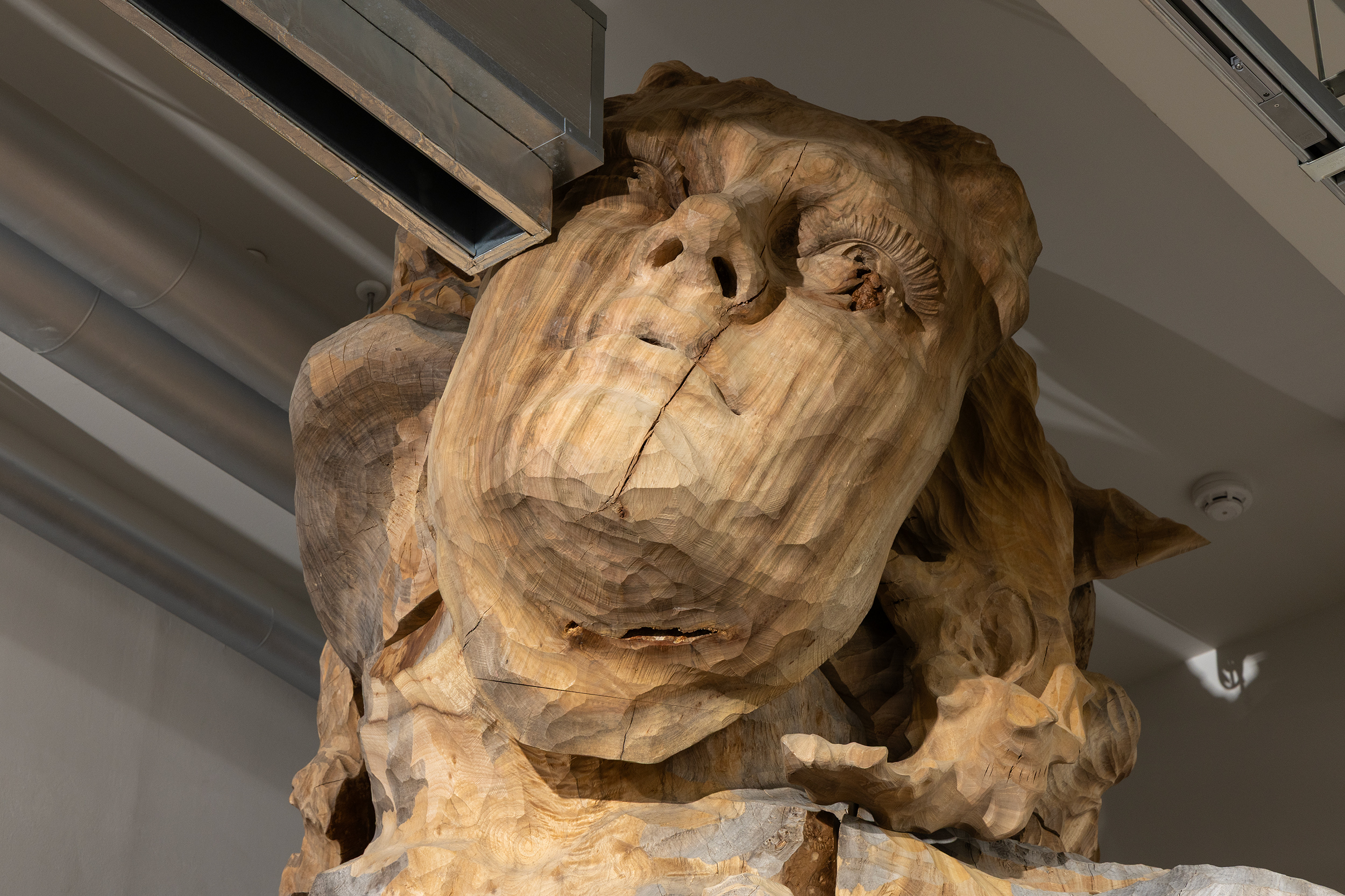
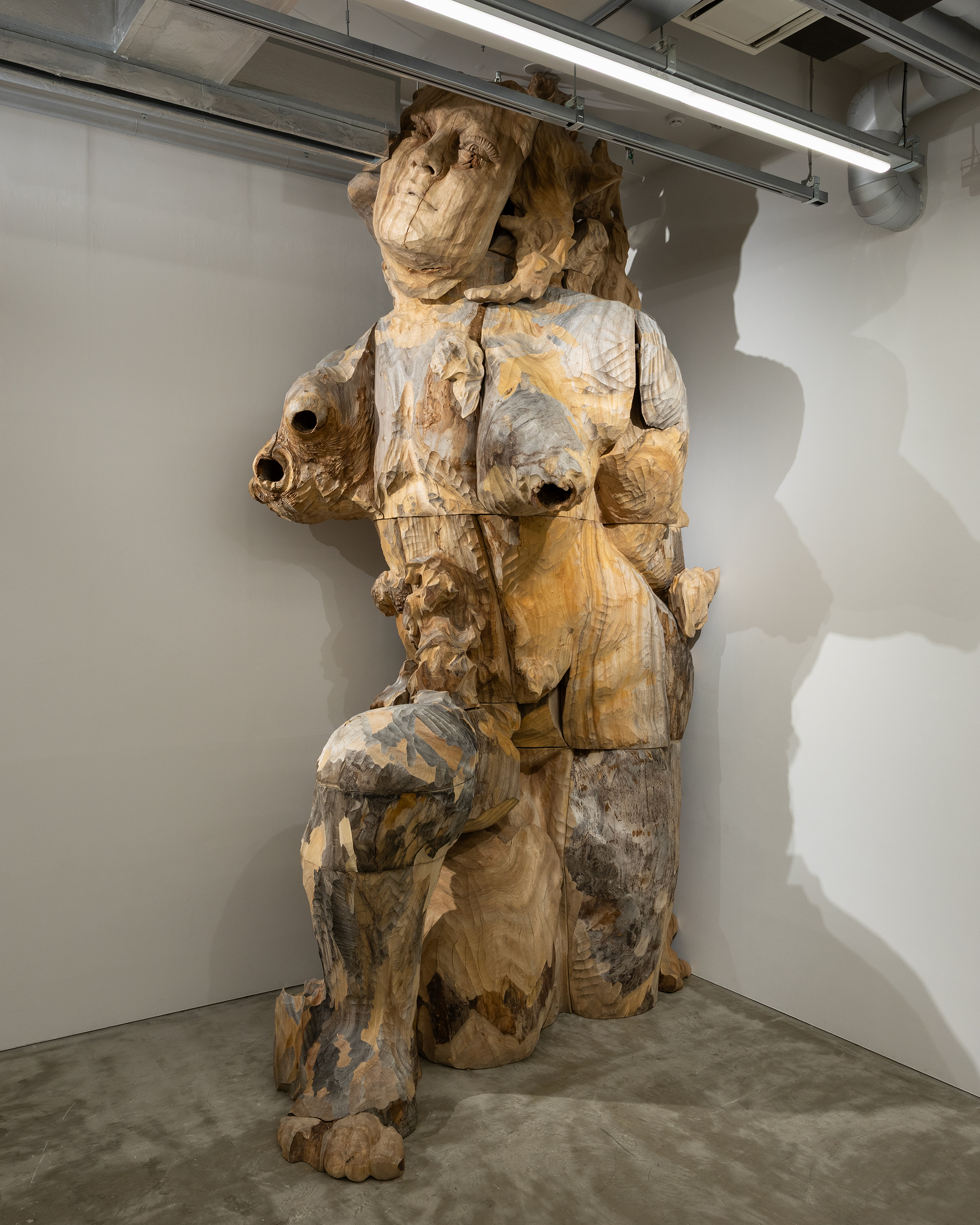
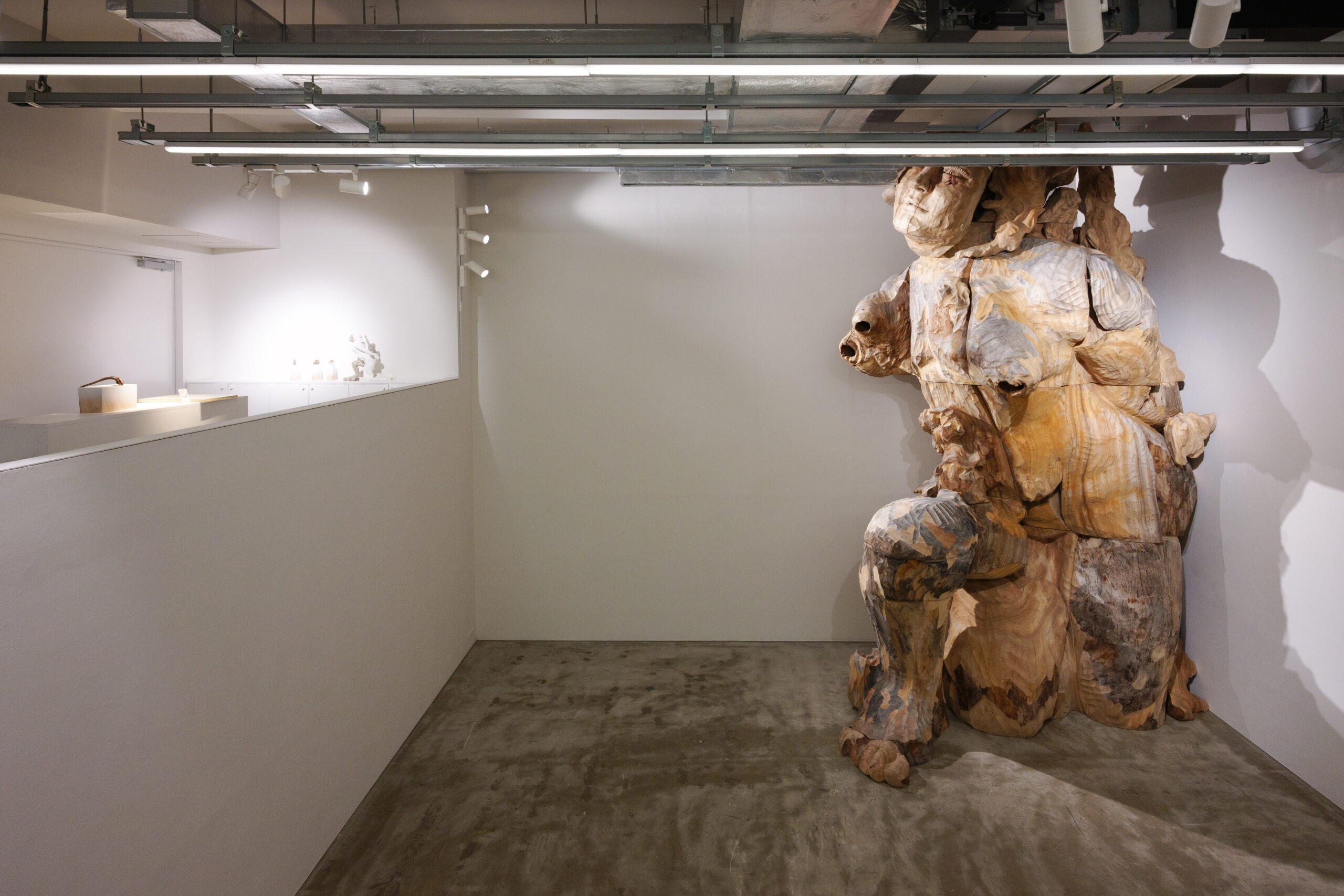
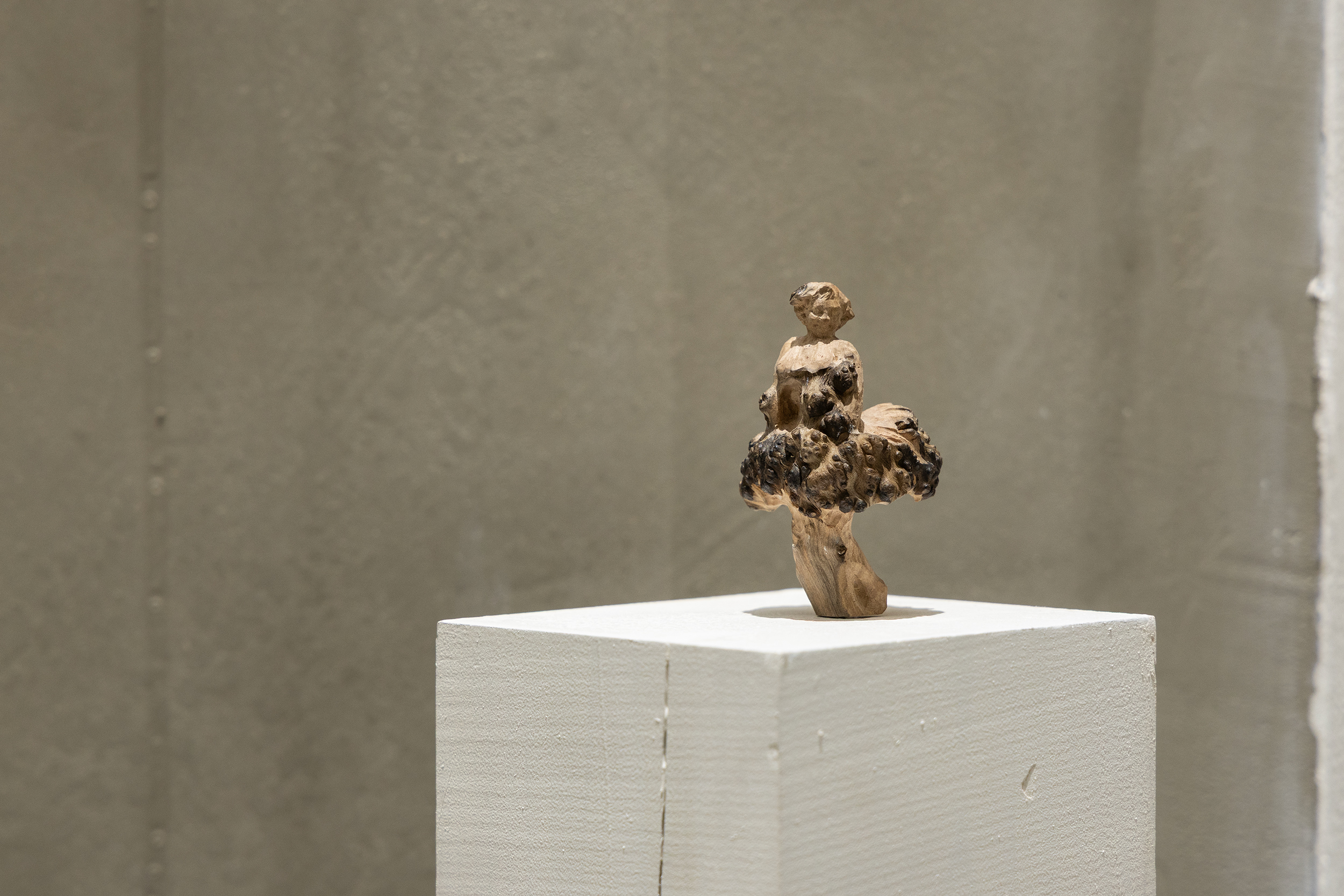
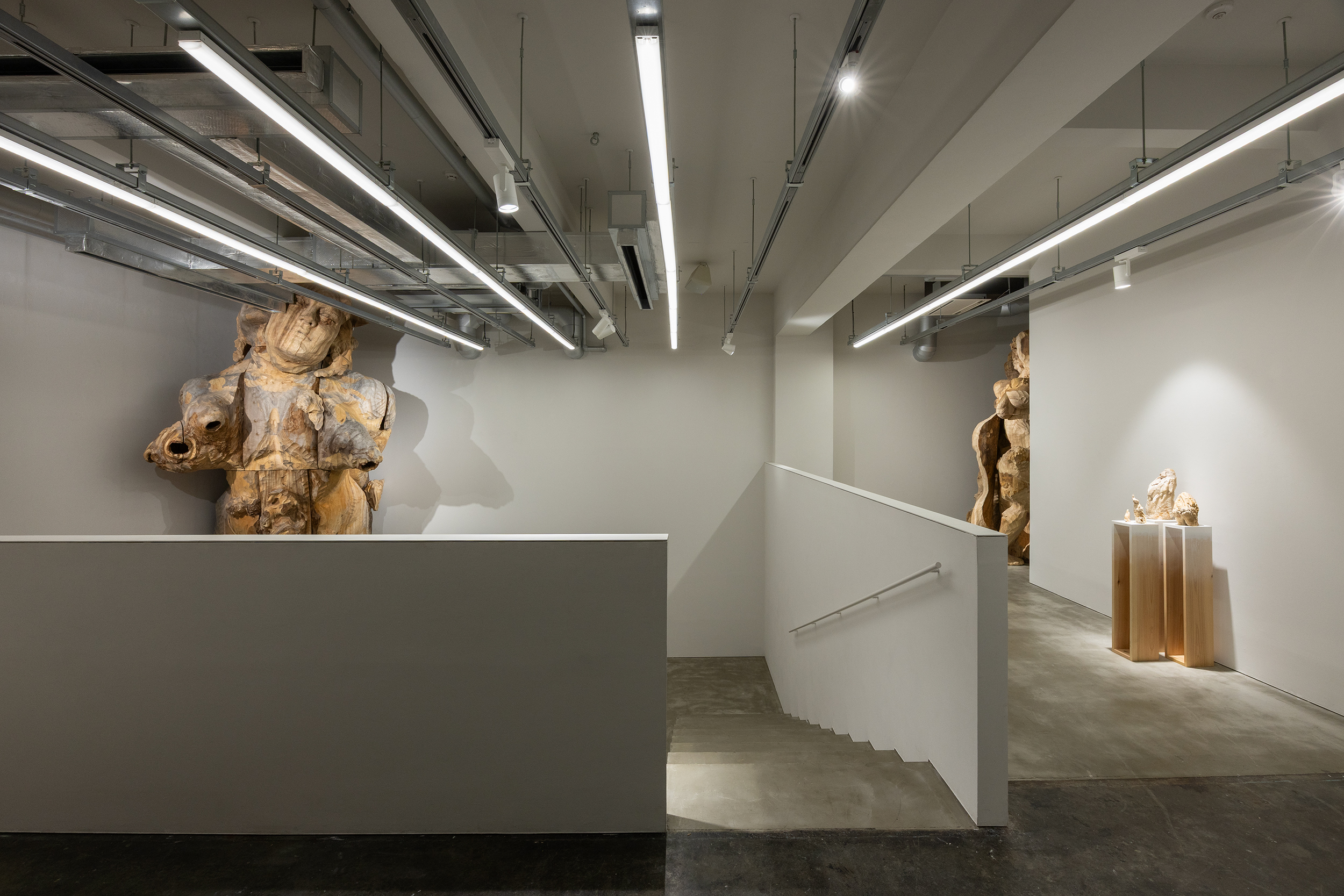
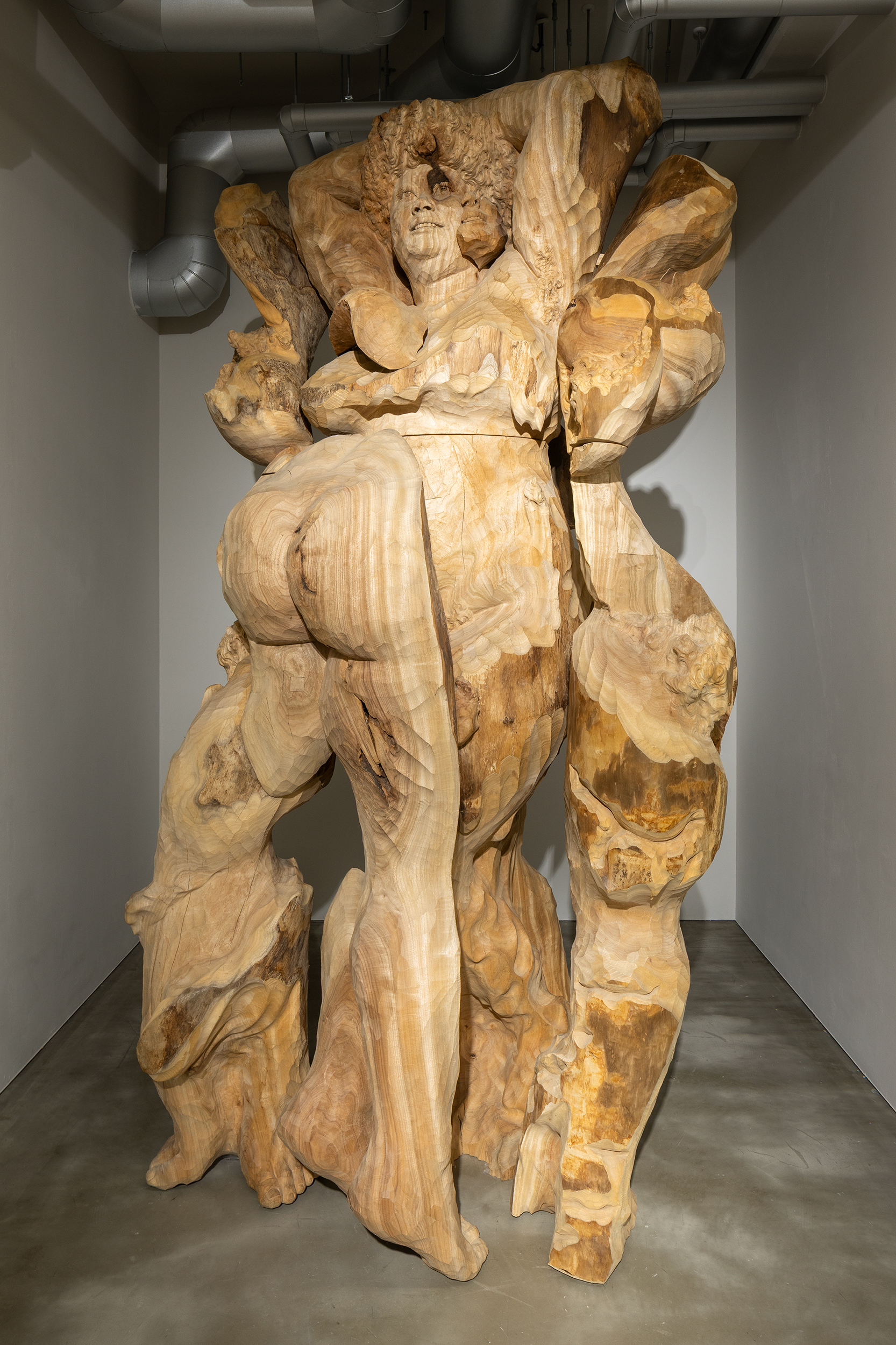
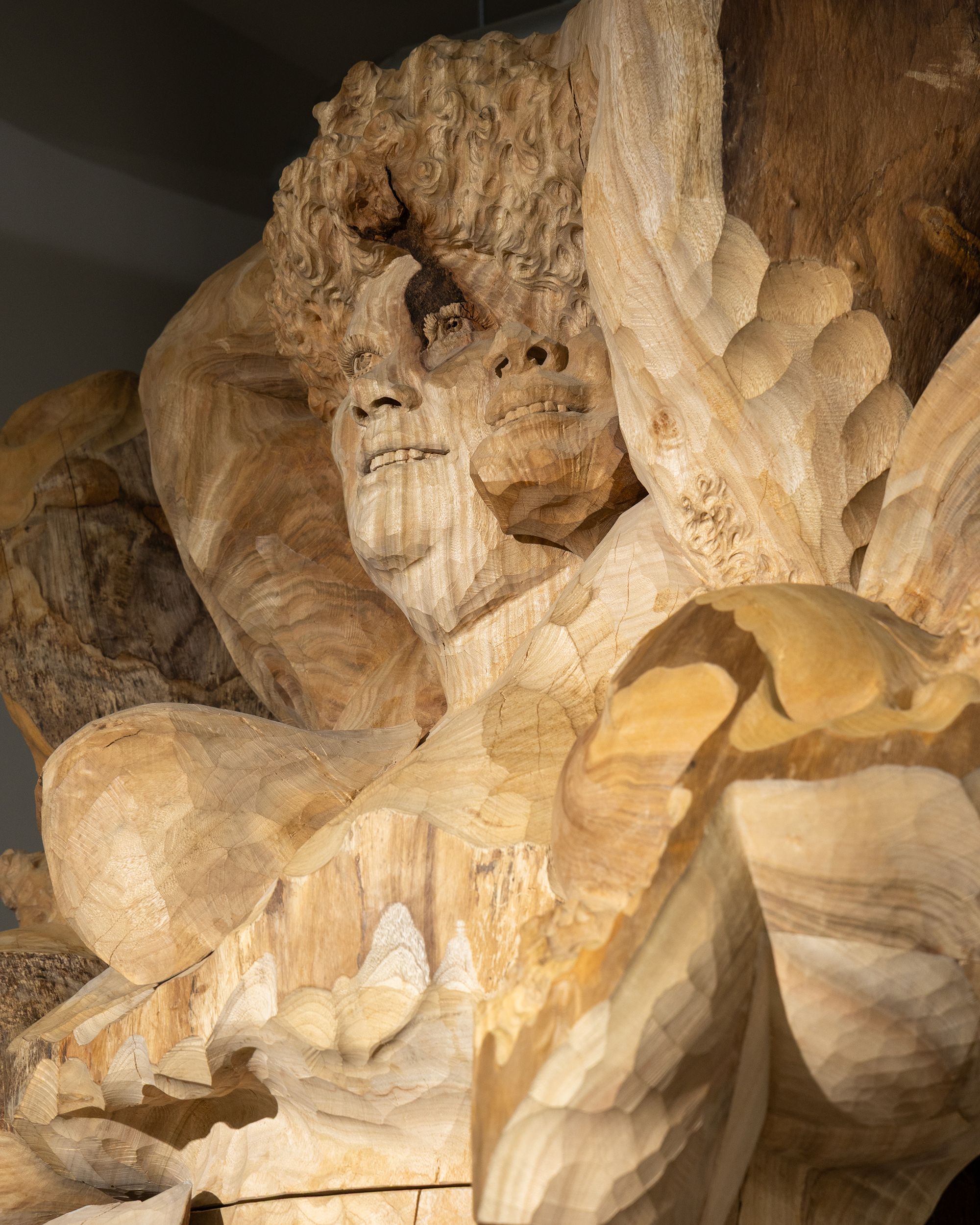
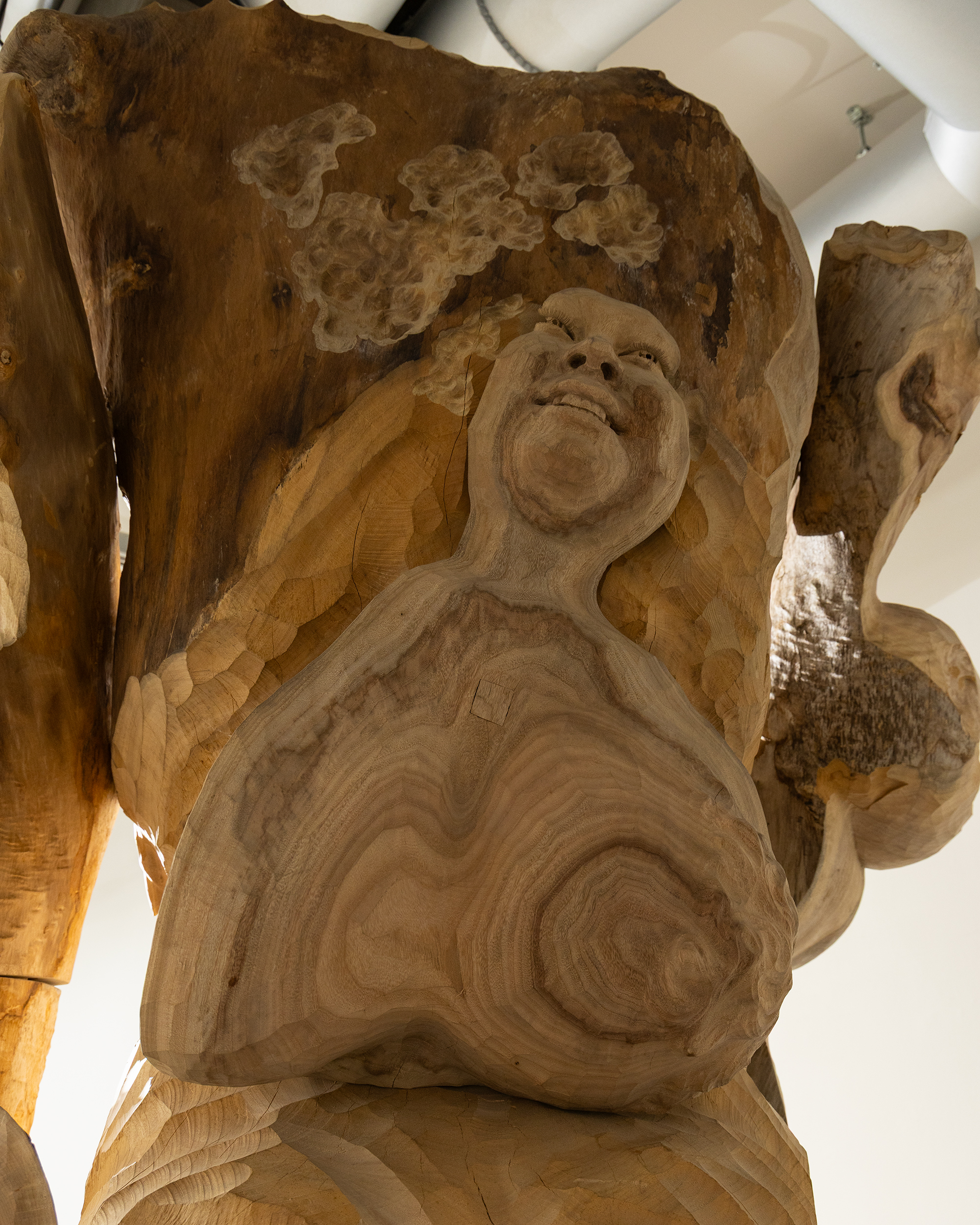
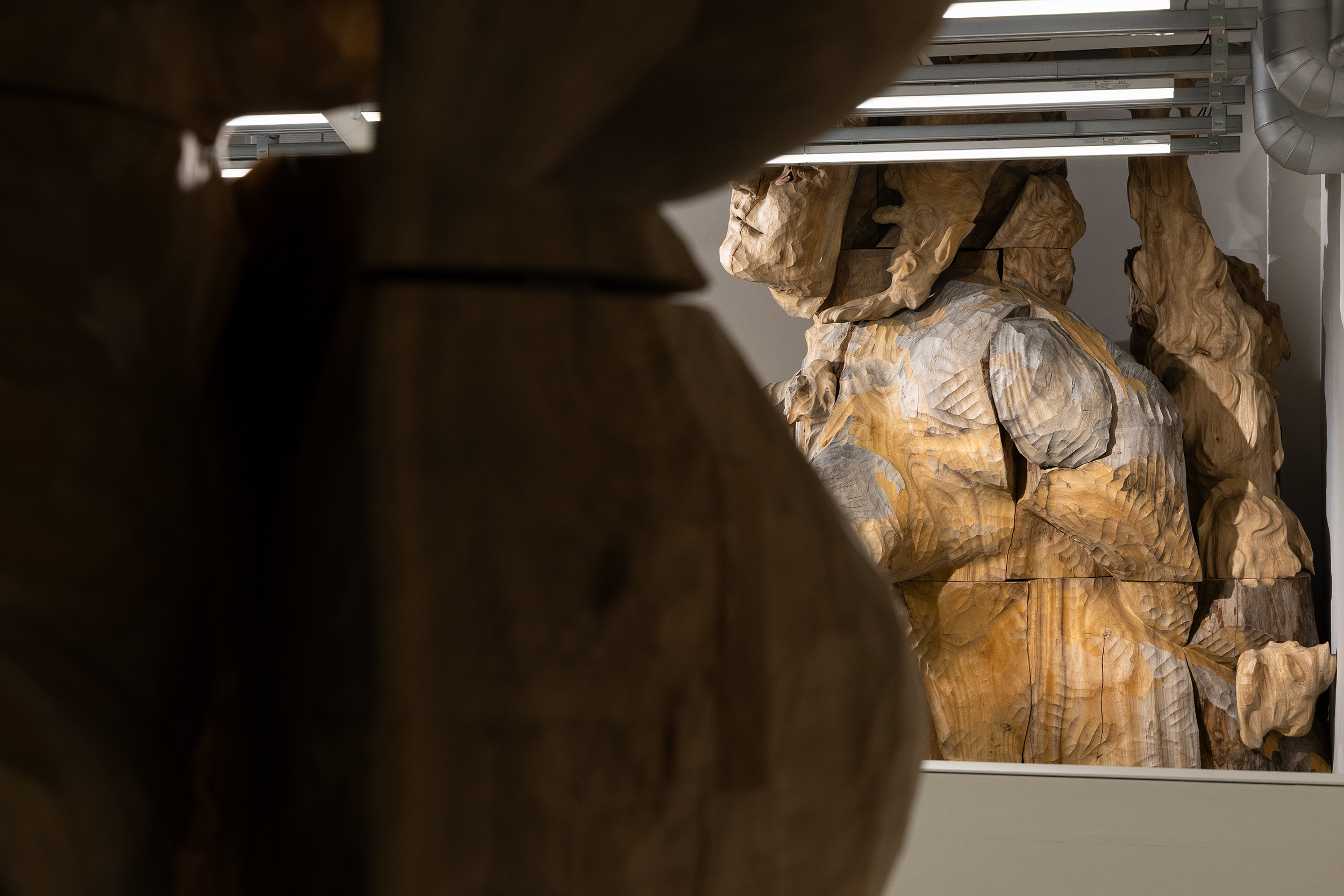
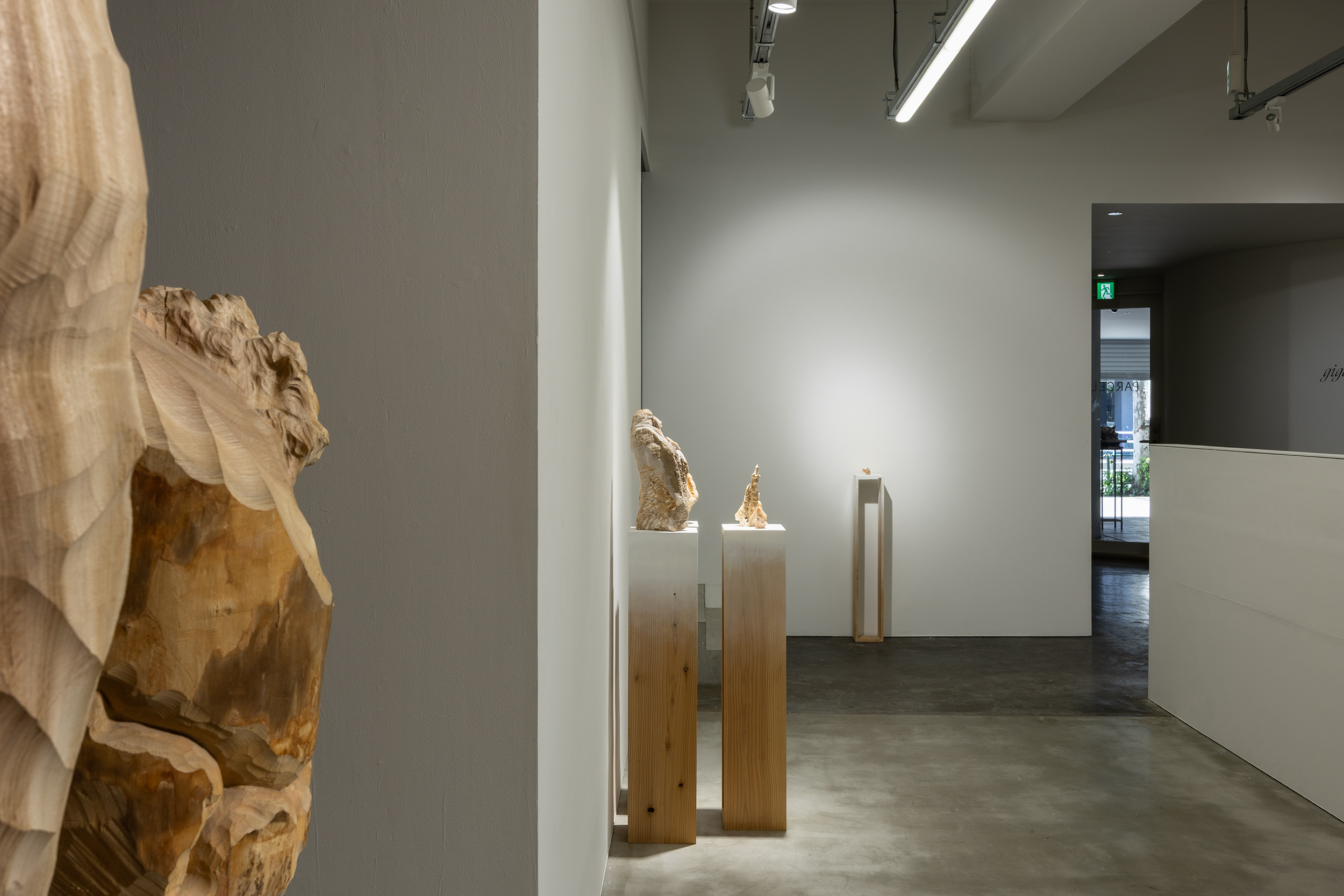
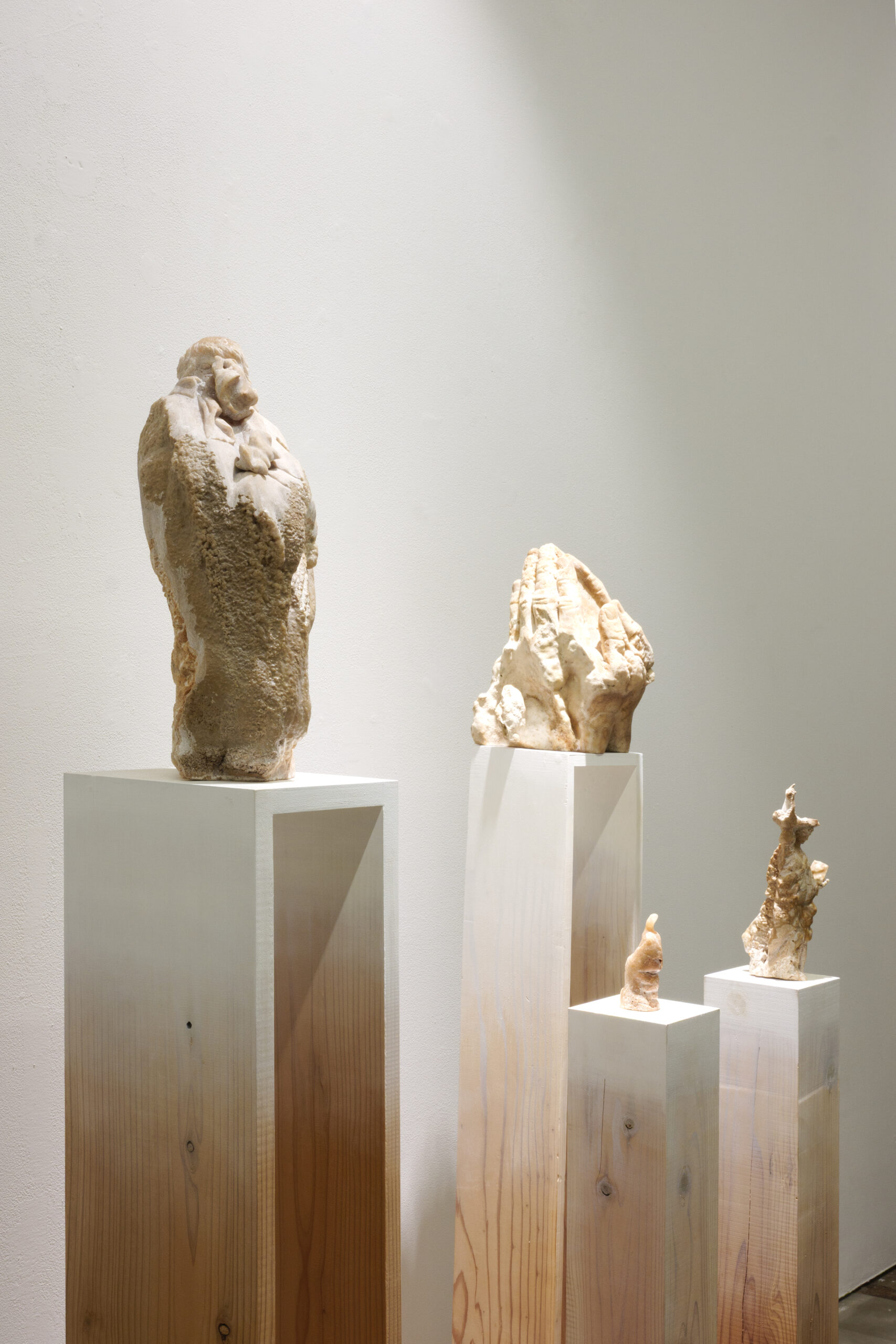
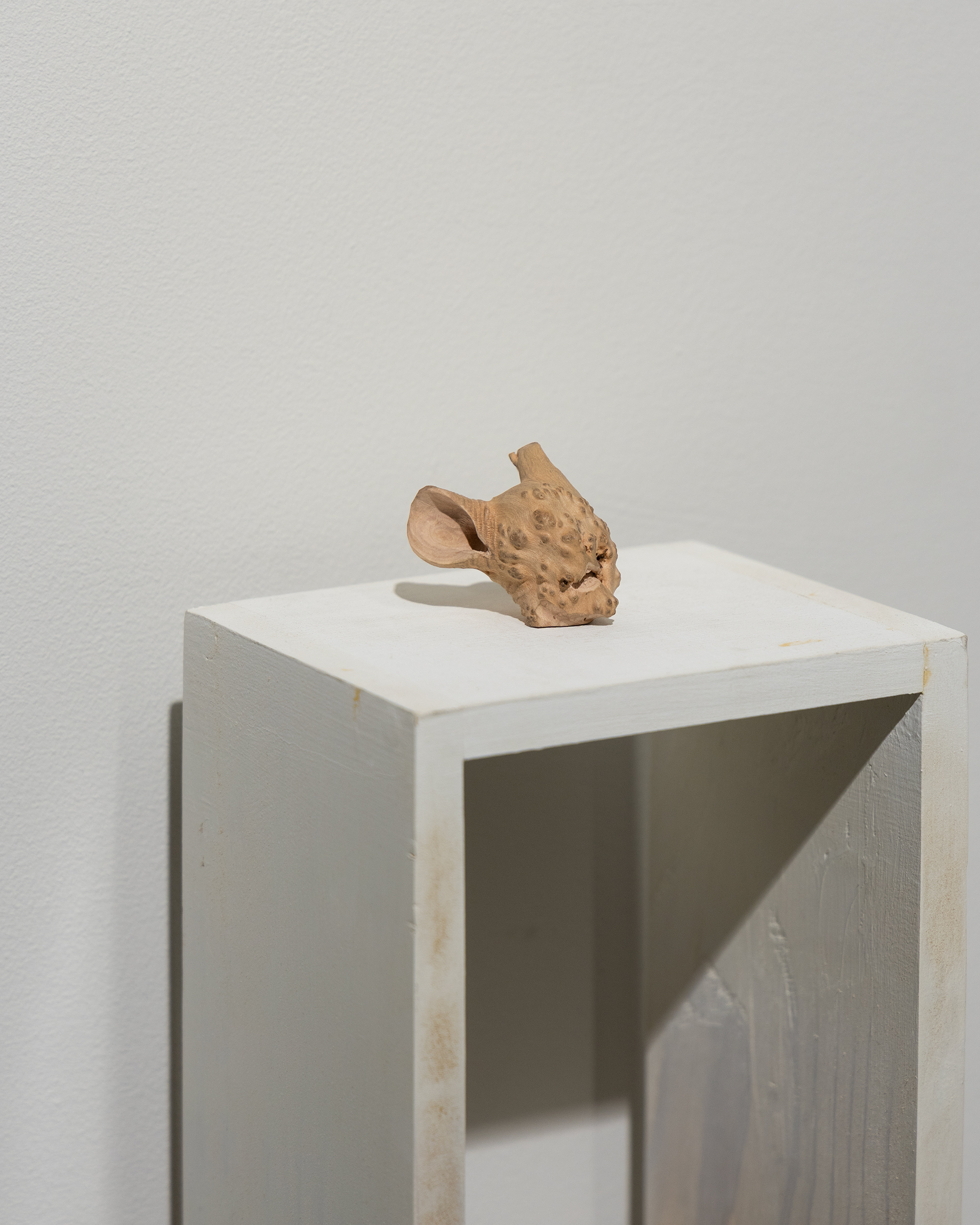
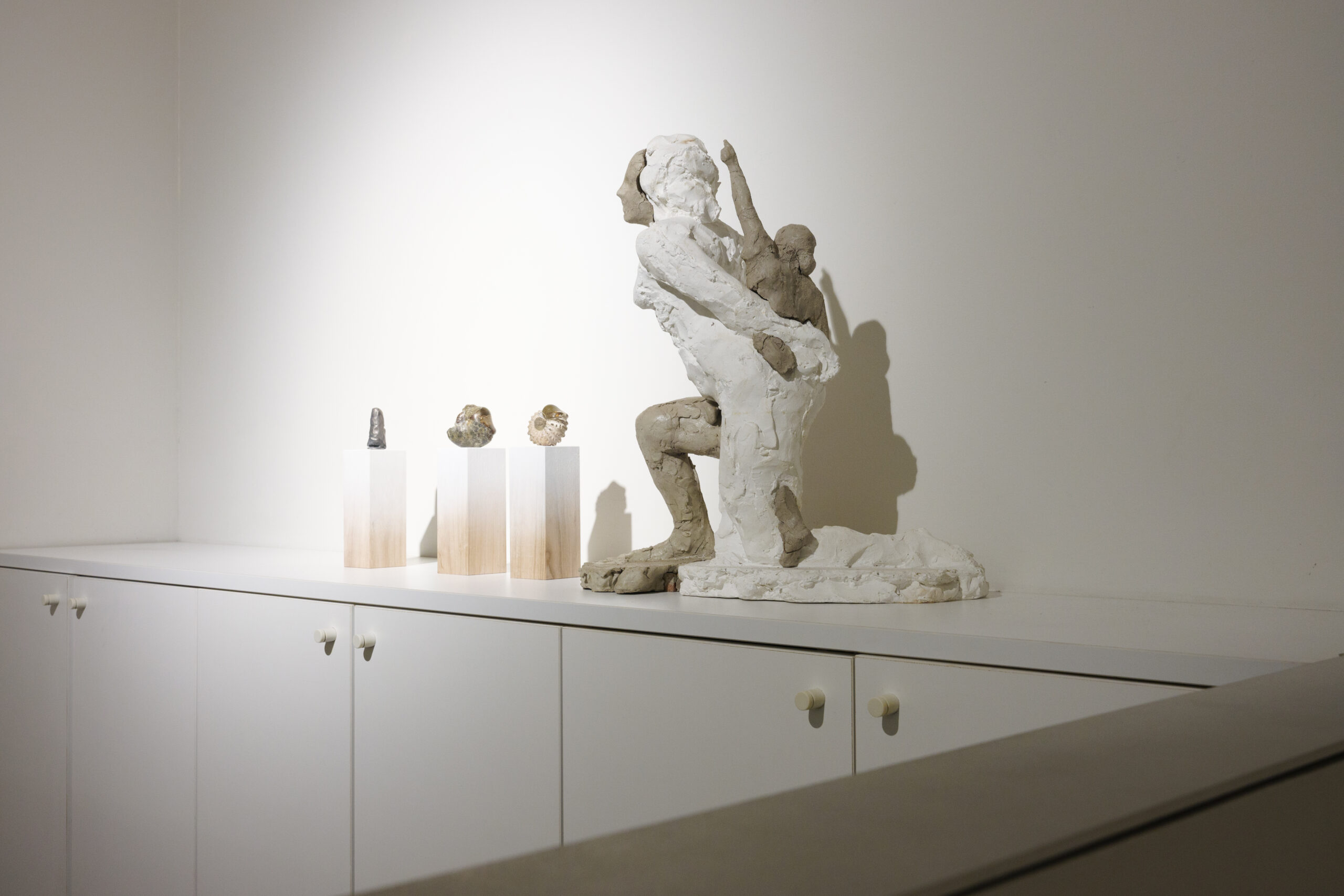
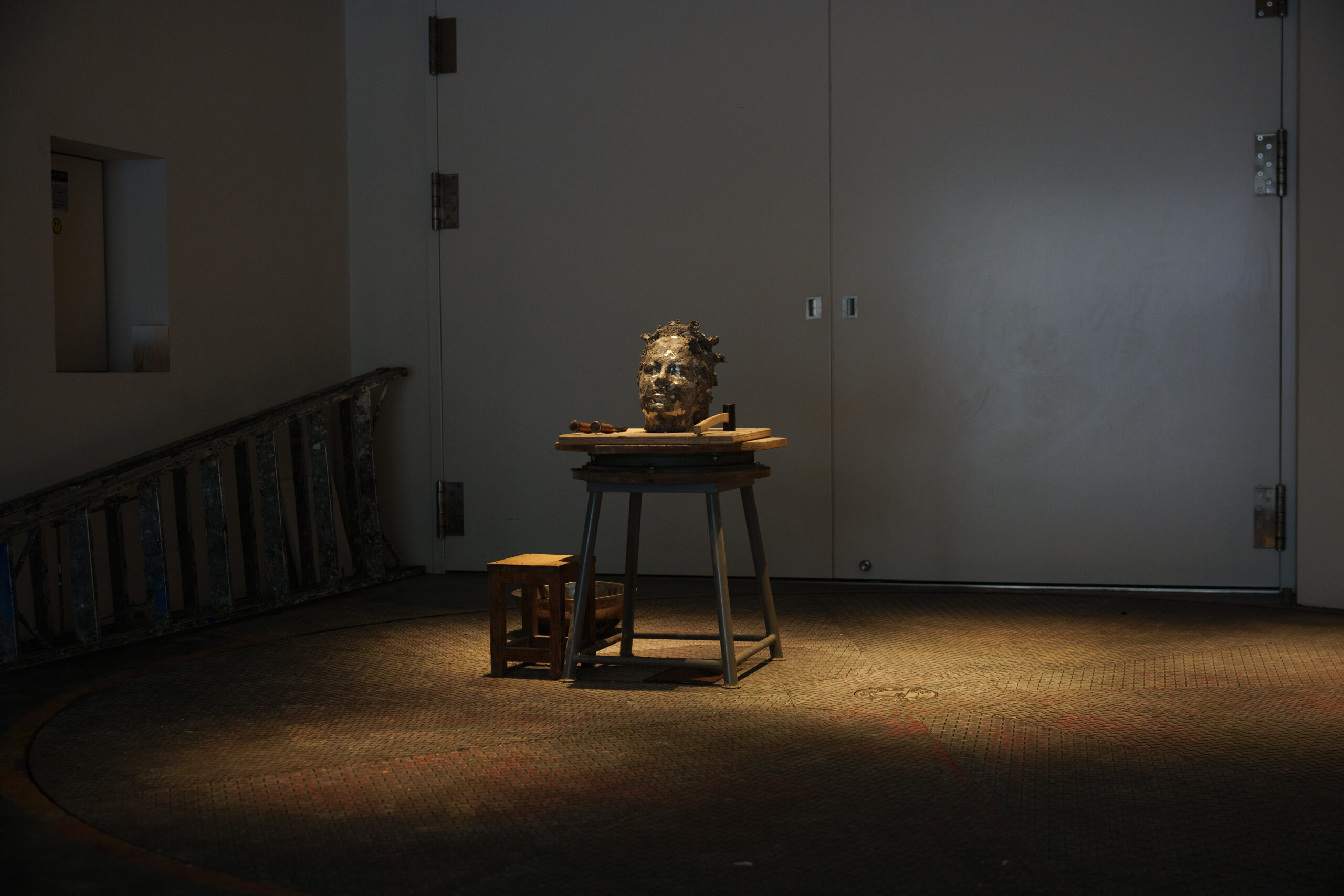
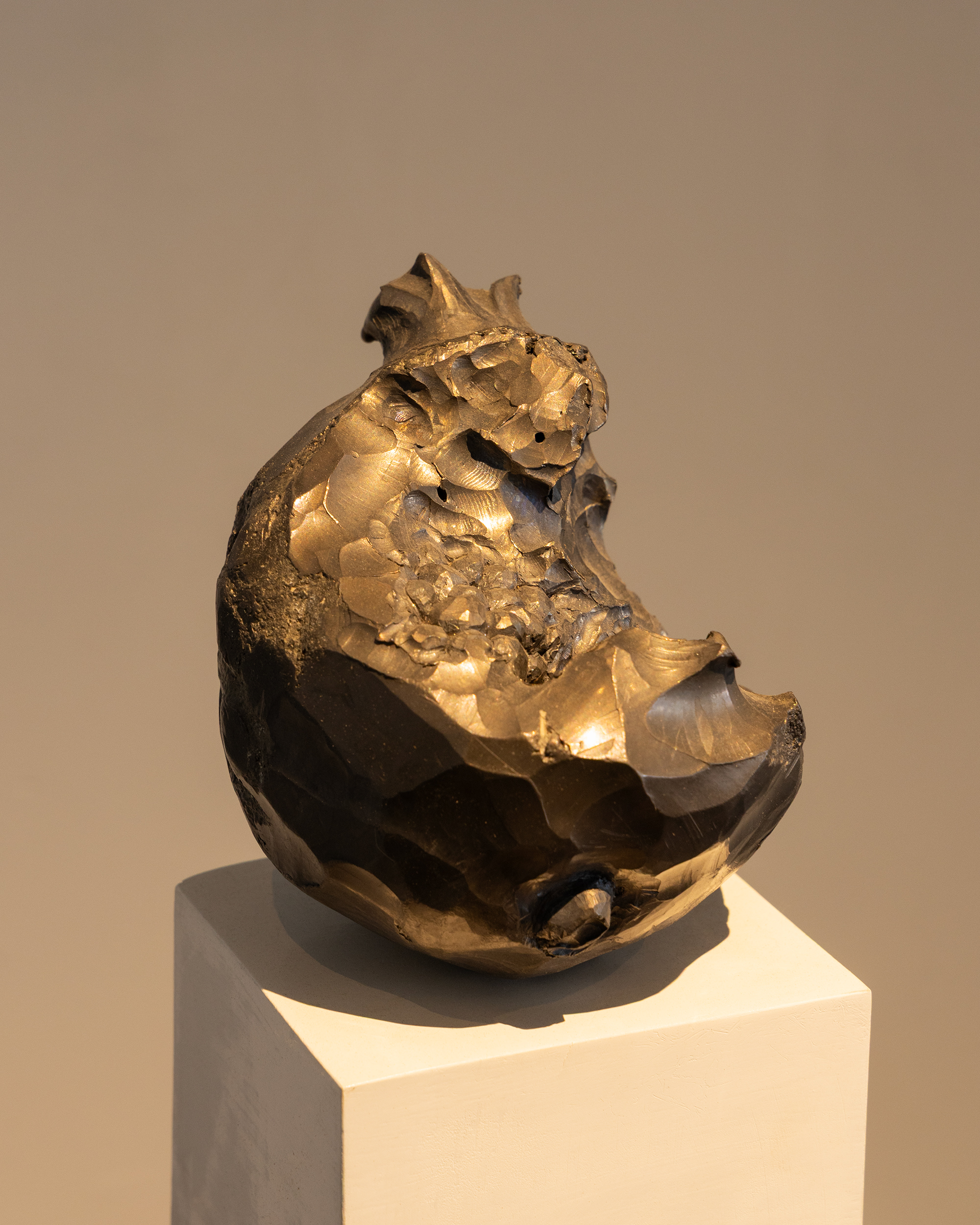
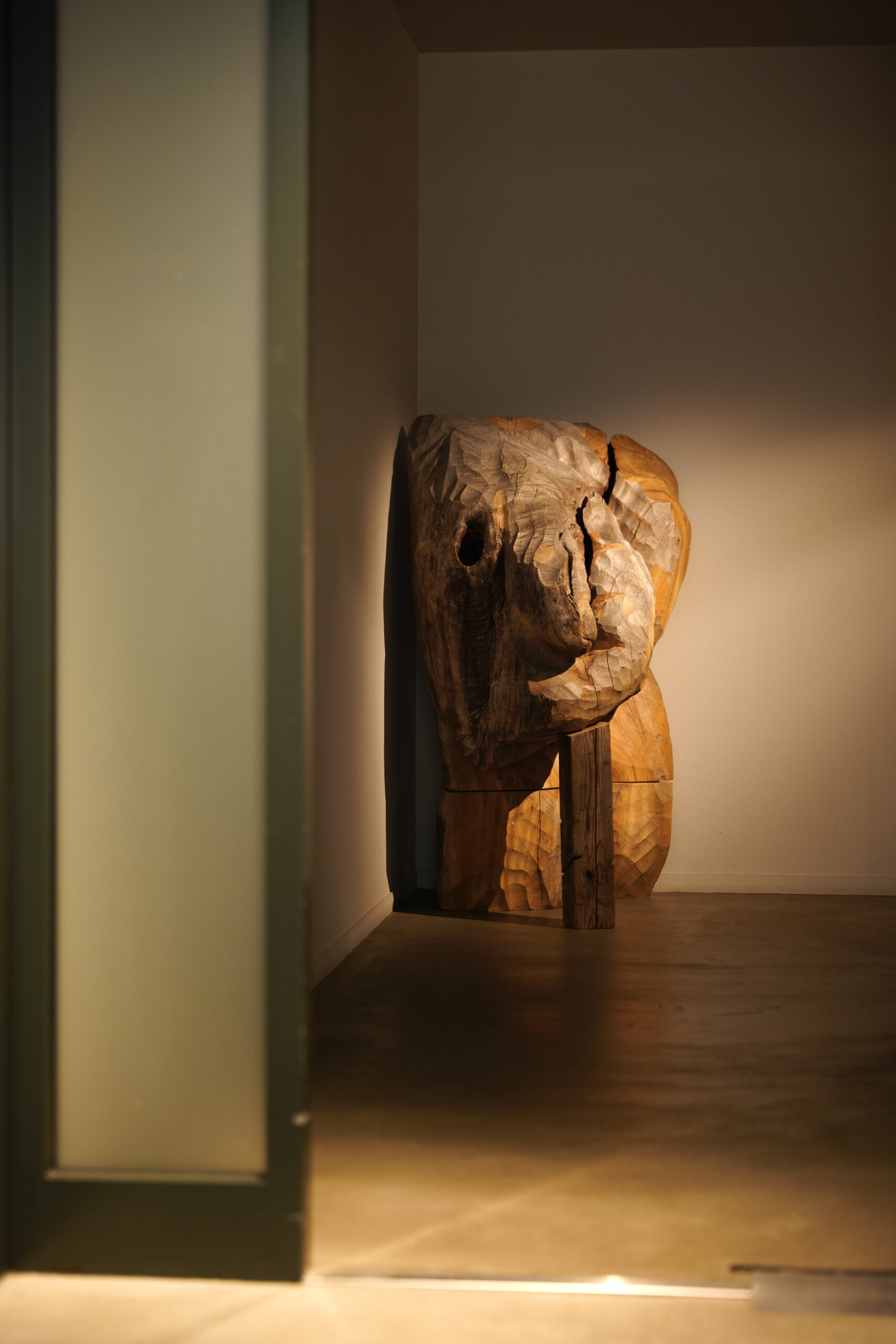
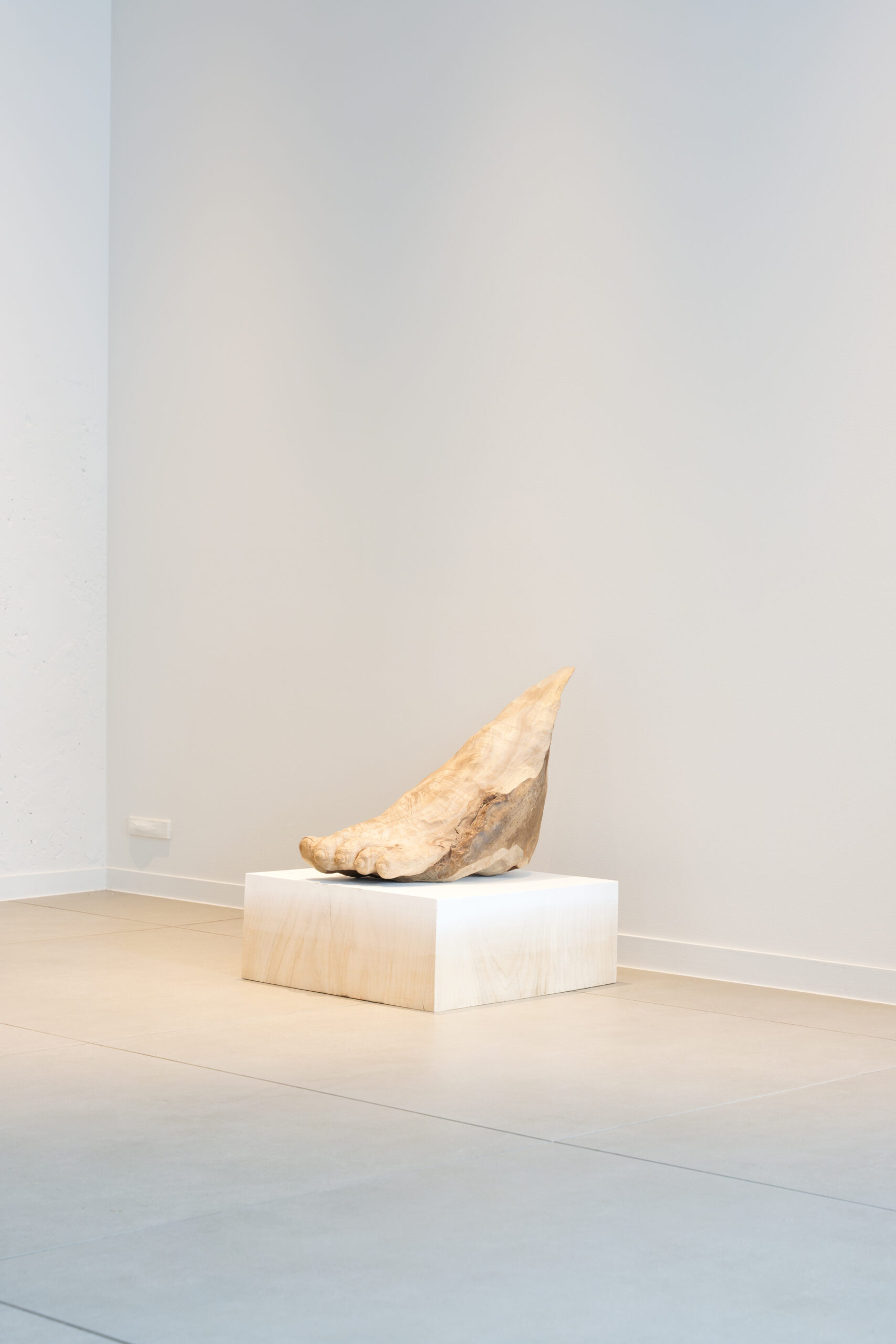
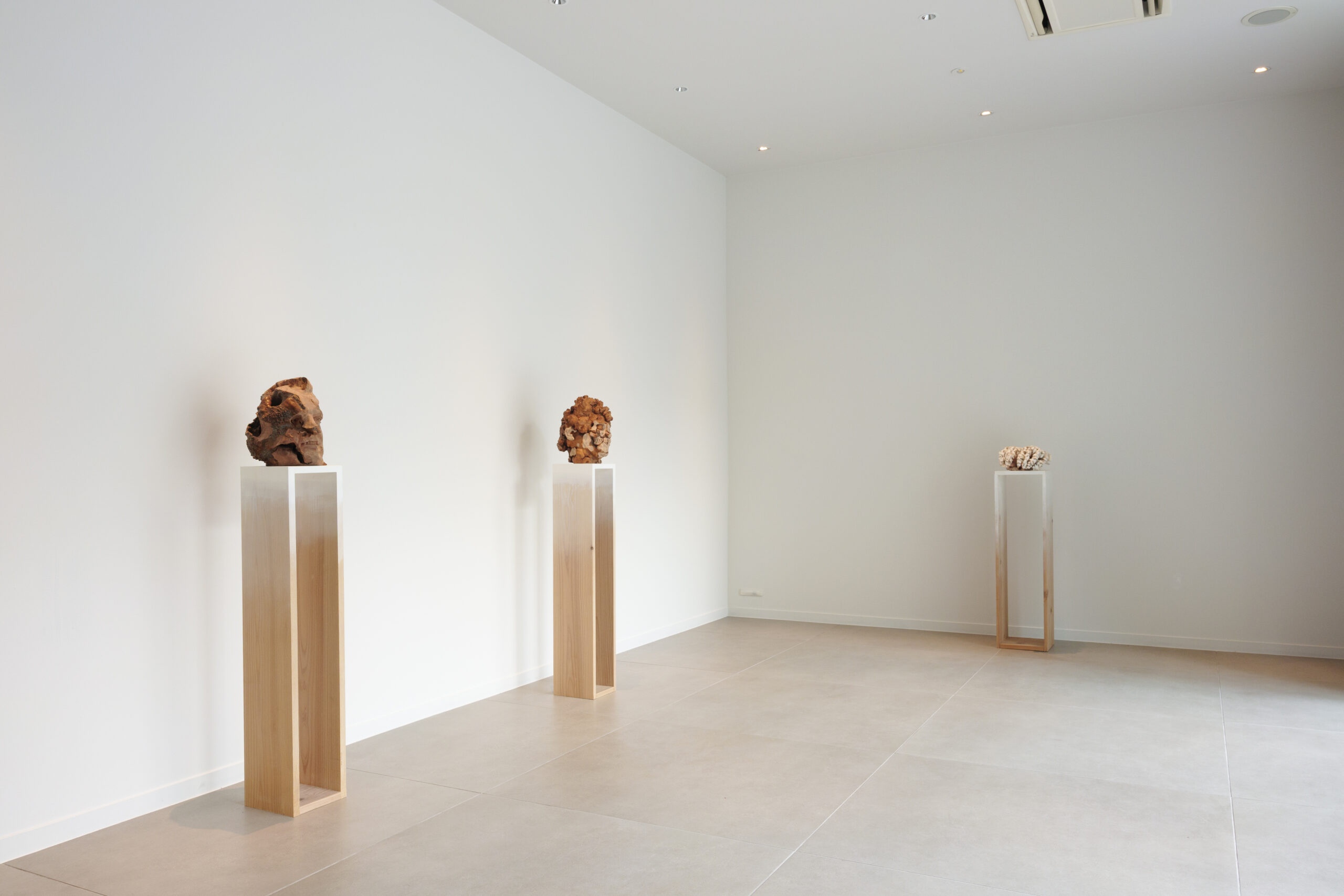
Photo credit: Kohei Omachi (W)
展覧会、各作家、作品等に関するお問い合わせはcontact@parceltokyo.jp までお願いいたします。
For further information regarding this exhibitions or the artists, artworks please contact us at contact@parceltokyo.jp
森 靖|Osamu Mori
森靖(もり・おさむ|1983年愛知県)。東京を拠点に活動する彫刻家。2007年東京藝術大学美術学部彫刻科卒業、2009年同大学院美術研究科彫刻専攻修士課程修了。
森の作品は、古典彫刻から仏教彫刻まで、時代や地域を横断する彫刻史を参照しながら、そこにエルヴィス・プレスリーやマリリン・モンローといった大衆文化のアイコンを重ね合わせてきました。彫刻史における人体表現の文脈と、複製・拡散を前提としたポップイメージという、本来異なる二つの系譜を一つの木彫作品の中で衝突させ、そのねじれから独自の表現を立ち上げています。代表作《Jamboree-E. P.》(2014)では、歌うエルヴィス・プレスリーを両性具有的な存在として造形し、高さ4メートルに迫る木彫作品として2020年の個展「Ba de ya」(PARCEL)で発表しました。
また素材の扱いにおいても、鑿の痕跡を残しながら、木という物質に対して手仕事の生々しさを保ったまま大型化を追求しています。2010年の初個展「Can’t help falling in love」以降、一貫してこのスケールへのこだわりを深め、2024年には運慶没後800年を機に、像のスケール感そのものを主題化する「巨大化宣言」を発表。同年、荻原碌山の生地・長野県安曇野市の碌山美術館にて自身初の美術館個展「森靖展 -Gigantization Manifesto-」を開催しました。
近年では、2011年の横浜トリエンナーレ「OUR MAGIC HOUR」への参加をはじめ、2022年にはPARCELよりFrieze SeoulのAsia Focusセクションに参加。同年、《3MMM-Rivalry》がオーストラリア・ヴィクトリア国立美術館(NGV、メルボルン)に収蔵され、2023年には《3MMM – Melt & Messy》がColección SOLO(スペイン)に収蔵。NGVトリエンナーレ2023にも参加するなど、国際的な評価を得ています。そして2026年には、これまで追求してきた「像」とスケールの関係をさらに押し広げ、約3年をかけて制作した過去最大級の新作《Liberty Goddess – Jazz》を制作。個展「giga」(PARCEL)にて発表しました。
Osamu Mori (b. 1983, Aichi Prefecture), sculptor based in Tokyo. Completed his BFA in Sculpture at Tokyo University of the Arts in 2007, and a MFA in Sculpture from the same institution in 2009.
Mori’s practice draws on sculptural history of western classics and Buddhist traditions spanning across various eras and locations, cross referencing classics with icons of popular culture, such as Elvis Presley and Marilyn Monroe. His work stands on the cross road of two fundamentally distinct lineages — the representation of the human body within the history of sculpture, and the pop image built on mass reproduction and dissemination, held together by a single work of wood carving to create a wholly original form of expression. His signature work Jamboree – E.P. (2014) presents Elvis Presley as an androgynous figure. Standing at nearly four-meter-tall, the wood carving was first presented at his 2020 solo exhibition Ba de ya at PARCEL, Tokyo.
In his handling of materials, Mori preserves the rawness of handcraft by retaining the marks of the chisel while pushing the limits of its scale. Since his debut solo exhibition, Can’t Help Falling in Love in 2010, his commitment to scale has only deepened over time. In 2024, with the 800th anniversary of Unkei’s passing, Mori announced his “Gigantization Manifesto,” placing the scalar presence of the sculptural figure at the center of his practice. That same year, he held his first museum solo exhibition, Osamu Mori: Gigantization Manifesto, at the Rokuzan Art Museum in Azumino, Nagano Prefecture — the birthplace of modern sculptor Rokuzan Ogihara.
In recent years, Mori has gained increasing international recognition. In 2011, Mori participated in the Yokohama Triennale OUR MAGIC HOUR, and in 2022 presented a solo exhibition at Frieze Seoul’s Asia Focus section, organized by PARCEL. That same year, 3MMM — Rivalry was acquired by the National Gallery of Victoria (NGV), Melbourne, Australia. In 2023, 3MMM — Melt & Messy was acquired by Colección SOLO, Spain. He also participated in the NGV Triennial 2023. In 2026, Mori will be presenting his largest work to date, Liberty Goddess – Jazz, at his solo exhibition giga at PARCEL. Three years in the making, the work marks a further extension of his longstanding exploration of the relationship between the ‘figure’ and scale.